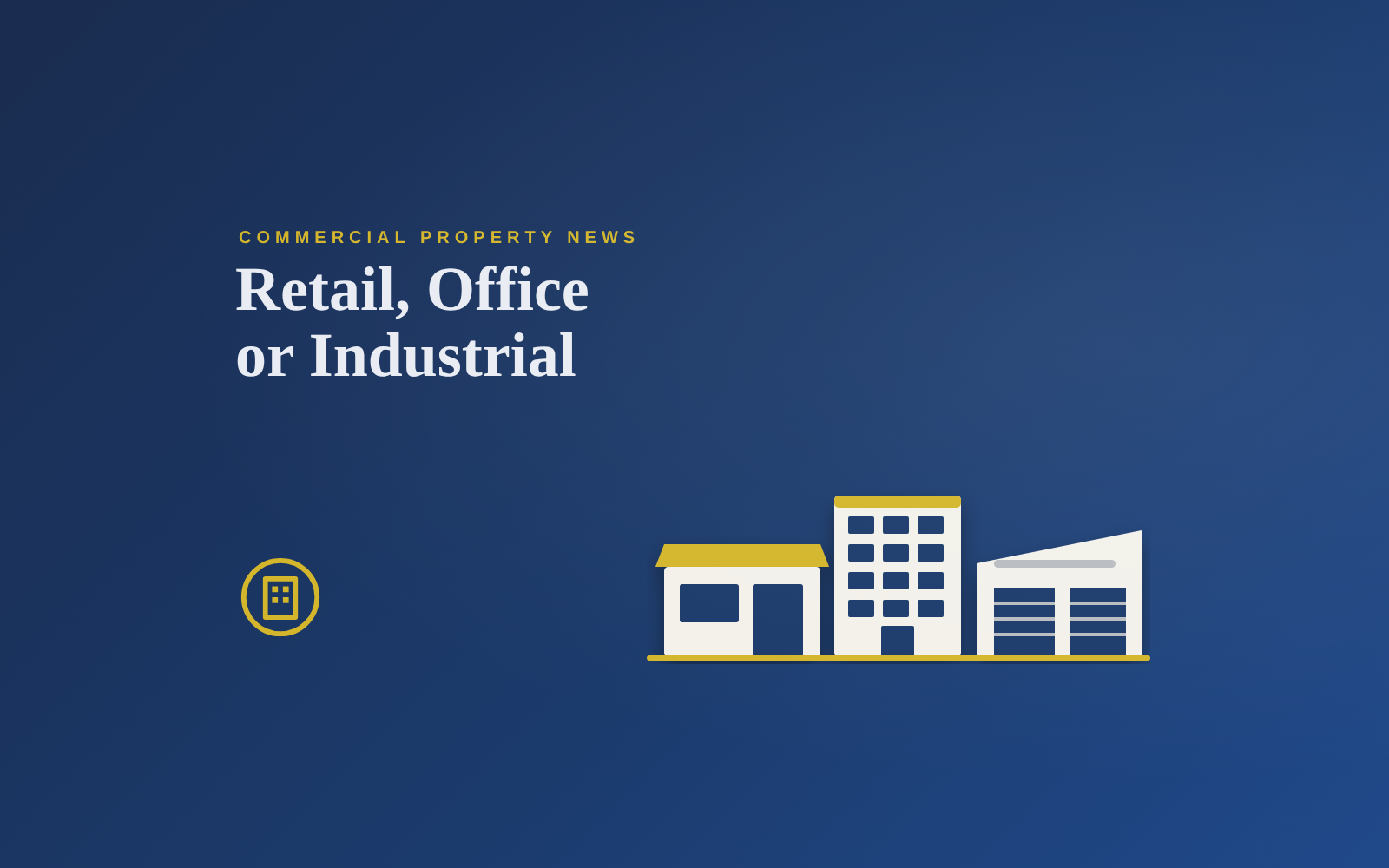
Every type of commercial property suits different businesses, and each has its own challenges. You might be launching a new venture, moving an established business out of its current office, or looking to invest in a retail asset. Either way, it pays to understand what you're getting into before you sign.
At Tewksbury Commercial, we spend every day helping clients across Brisbane. Here's a practical look at retail, office and industrial property: what drives each one, where things go wrong, and how to choose well.
Retail
Retail covers shopfronts, cafés, showrooms, boutiques and service outlets. It's anywhere customers walk in to buy something or experience what you offer.
Online shopping hasn't killed bricks-and-mortar retail. It has raised the bar. People still want to see and touch products, get advice from someone who knows their stuff, and enjoy a morning out. The retailers doing well offer an experience, not just stock on shelves.
What to look for:
- Visibility and foot traffic. Main road exposure, good signage opportunities and a steady flow of passers-by.
- The right neighbours. Complementary tenants that bring in your kind of customer.
- Parking and access. In much of South East Queensland, customers drive. Convenient parking can matter as much as being close to a train or bus stop.
- Your customer, not just your floor area. Rent per square metre only means something if your target market is nearby.
The risks: Discretionary retail such as fashion and homewares feels economic slowdowns first. Outgoings, marketing levies and fit-out costs add up quickly. If you sell things people can easily buy online, you're competing on price with a warehouse.
What's working: Food and beverage, health and wellness, medical and allied health, specialty services, and any business that gives people a real reason to visit in person.
In Queensland, most retail leases fall under the Retail Shop Leases Act 1994. It sets rules around disclosure statements, outgoings and other lease terms. Make sure you understand your rights and obligations before you commit.
Office
Businesses now want better space rather than more of it. Hybrid work has changed how offices are used, so a workplace has to be somewhere staff want to be, not just somewhere they're told to go.
What to look for:
- An easy commute. Access to public transport, arterial roads and parking. Many Brisbane workers still drive, so car parks are a real drawcard.
- Amenity. Good cafés, gyms and places for lunch nearby.
- A quality building. Natural light, efficient air-conditioning (essential through a Queensland summer), end-of-trip facilities and a solid sustainability rating.
- Flexible layouts. Floorplates that can adapt as your team grows or changes.
The challenges: With hybrid work, attendance can swing from a full office one day to a handful of people the next. Fit-outs are expensive, and the old rows-of-cubicles layout has had its day. Most businesses now want a mix of collaboration areas, quiet zones and meeting rooms. Plan for how your team actually works before you commit to a size.
Industrial
Warehouses, distribution centres, manufacturing plants and logistics hubs aren't glamorous, but they keep the economy moving. They have been one of the strongest-performing sectors in South East Queensland.
Growth in e-commerce, supply chain disruption and strong population growth in the region have all pushed up demand for well-located industrial space. Modern facilities are also increasingly automated and tech-driven.
What industrial tenants care about:
- Clearance and hardstand. High internal clearance for racking, plus room to manoeuvre trucks.
- Loading. Enough docks, roller doors and B-double access.
- Connectivity. Quick access to major routes like the Gateway, Logan and Ipswich motorways, the Bruce and Pacific highways, and the Port of Brisbane and airport. That's why precincts such as the Australia TradeCoast, the Logan Motorway corridor, Yatala and the Ipswich region are in demand.
- Room to grow. Expanding businesses can't just squeeze into the same footprint.
The challenges: Zoning and environmental rules can be tricky, especially near residential areas. Specialist fit-outs such as cold storage are costly. Well-located industrial land close to Brisbane is getting scarcer and more expensive. Check flood overlays carefully. It's a very real consideration in parts of South East Queensland and can affect insurance, operations and value.
How to choose the right space
The right property isn't the "best" type. It's the one that suits where your business is now and where it's heading.
- Start with the function. Choose retail if you sell to customers face to face, office if your team works mostly at desks and in meetings, and industrial if you store, make or distribute goods.
- Size it realistically. For retail, decide whether you need a flagship or a neighbourhood shop. For office, work from your hybrid policy and how much space each person really needs. For industrial, think about throughput and how fast your product has to reach the market.
- Understand the lease. Commercial leases can include gross or net rent, outgoings, rent reviews, make-good clauses, incentives and more. Get professional advice before you sign.
- Think ahead. Ask whether you can expand if things go well, whether you can adjust if your needs change, and whether the landlord is likely to work with you.
The Queensland Market
South East Queensland is one of the fastest-growing regions in Australia, and that growth is showing up in the commercial property markets we work in.
- Retail: Neighbourhood centres and suburban strips with strong local catchments are doing well, particularly those built around essential services, food and health. That applies in established western suburbs and in the new communities growing south of Brisbane.
- Office: In the inner west, suburbs like Toowong, Milton and Kenmore appeal to businesses that want quality space without CBD rents. Toowong and Milton are close to the city and have train stations, Coronation Drive and plenty of cafés and amenity. Kenmore suits businesses that want a suburban base near where their staff and clients live, with easier parking and a village feel. Many professional services, medical and small corporate tenants are choosing these locations over the CBD.
- Industrial: Wacol remains a key industrial hub, sitting where the Ipswich Motorway, Logan Motorway and Centenary Highway meet. It gives quick access to Brisbane, Ipswich and the major freight routes. Further south, fast-growing communities like Flagstone and Yarrabilba are creating new demand for local industrial, trade and service space. Thousands of new households are arriving, and they need businesses, suppliers and services close by. Occupiers are focusing on connectivity, efficiency and room to grow, not just size.
Population growth, new master-planned communities and major infrastructure, including the lead-up to the Brisbane 2032 Olympic and Paralympic Games, are all reshaping where businesses want to be. The location you choose today should suit how your area is likely to look in five to ten years.
Make it a strategic decision
Too many businesses chase the cheapest option or the flashiest space, then find themselves locked into a property that doesn't suit how they work, doesn't serve their customers and leaves no room to grow.
A good leasing decision is informed by the local market, built around how your business actually operates, and made with the future in mind. Whether you're after retail, office or industrial space, the best results come from doing your homework and thinking beyond the next few months.
If you'd like straightforward advice from people who know the Brisbane market, get in touch with the team at Tewksbury Commercial. We'll help you make the right call with confidence.
You might also be interested in
Sep 15, 2026
Maximising Your Rental Income
The Queensland commercial property market continues to offer strong opportunities for landlords and investors looking to generate reliable rental income and long-term capital growth. However, like any